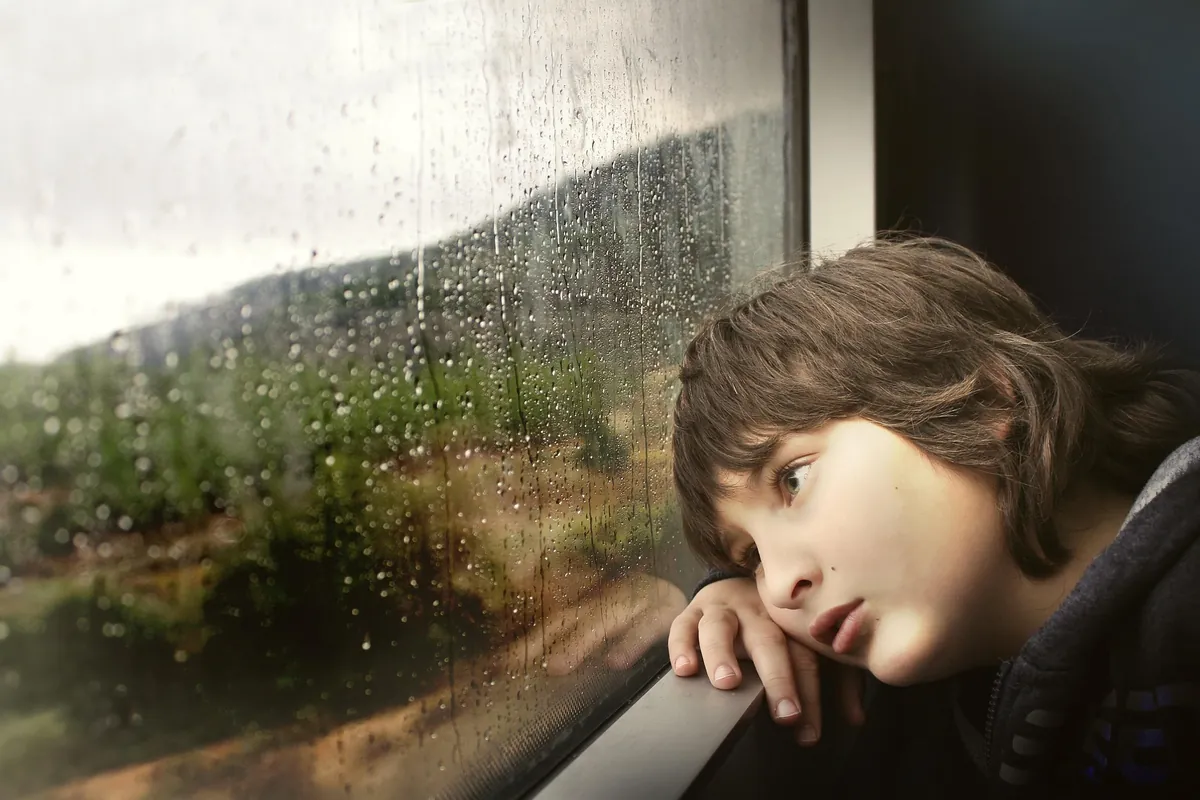
The two dreaded words I hear from my own child way too much. “I’m bored.”
Reflexively, your brain starts searching for a solution.
Should I suggest a game? Offer an activity? Plan an outing? Let them watch something? Find a snack? Hand over a screen for “just a little while”?
This one hits home for me. As most of you know, I have a 10-year-old daughter, Ari, who has been attending my North County San Diego nature class enrichment program for several years, since I founded it in 2019. And like many families, I sometimes feel the pressure to keep her entertained, engaged, stimulated, scheduled, and preferably not constantly asking for a screen.
But here’s the thing I am being steadfast about:
Boredom is not always a problem to solve. On the contrary, sometimes, boredom is what’s necessary to spark kids’ imaginations.
Kids Have Always Had To Make Their Own Fun
For most of human history, childhood did not come with packed playrooms and play dates, endless activities, streaming shows, tablets, battery-powered toys, or calendars full of enrichment options.
Children played with what was around them:
- Sticks
- Scraps of fabric
- Hoops
- Buttons and string
- Piles of stones
- Patches of dirt
- Trees
- Fields
- Creeks
- Other kids and a long afternoon
In pioneer days, many toys were simple, handmade, or created from whatever materials were available. Children made dolls from rags or corn husks. Games could be built from rope, wood, pebbles, scraps of fabric, or nothing more than bodies in motion: tag, hopscotch, hide-and-seek, leapfrog, sack races, and make-believe.
Were kids bored back then?
Of course they were.
Children have probably always complained that there was nothing to do. The difference is that boredom did not always trigger an immediate rescue mission from adults. There often was not a toy closet to raid, a device to hand over, or an activity to schedule.
Kids had to move through that restless space and figure something out.
That “figuring something out” is the part worth protecting.
When children are not immediately entertained, they get a chance to become the authors of their own play.
Modern Childhood Has Fewer Empty Spaces
Today, many children have more options than ever. More toys. More shows. More apps. More activities. More classes. More adult-led structure. More. More. More.
Some of that is wonderful. Kids can learn, explore, and connect in ways previous generations never could.
But there is a tradeoff.
Modern childhood often has fewer unfilled moments.
Those moments are where a child decides what to build, invents a game, notices the lizard on the fence, picks up a pencil, opens a book, gathers rocks, makes a fort, or asks a strange and wonderful question.
When every empty space gets filled for them, children may get less practice creating their own momentum.
That does not mean parents should never help, guide, suggest, or participate. Of course we should.
But sometimes, before we step in, we can pause.
We can give boredom a little room to breathe.
Boredom Can Feel Uncomfortable, But That Does Not Make It Bad
Part of the challenge is that boredom often sounds unpleasant.
A bored child can be whiny. Restless. Annoyed. Dramatic. Highly committed to letting everyone know that life has become impossible. Kids really know how to be victims!
So naturally, we want to fix it.
But boredom is not always a sign that something has gone wrong. Sometimes it is simply the uncomfortable transition between being entertained and becoming self-directed.
That transition can be hard.
A child may not immediately know what to do with an unstructured moment. They may wander. Complain. Ask for a screen. Follow you around the kitchen. Announce, repeatedly, that there is nothing fun in the entire world.
But given enough time, something can shift.
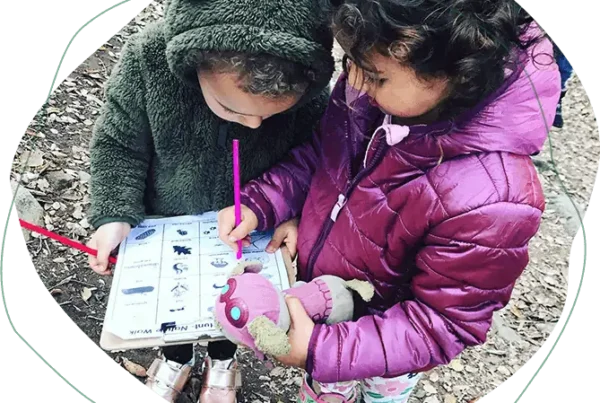
A blank piece of paper becomes a comic strip. A pile of blankets becomes a fort. A cardboard box becomes a spaceship. A few blocks become a city. A backyard becomes a restaurant, jungle, laboratory, or fairy village. A slow walk becomes a search for lizards, birds, bugs, tracks, seed pods, or whatever strange little discovery nature decides to offer that day.
Kids need practice sitting with the empty moment long enough to discover what might come next.
Nature Is One Of The Best Places For Boredom To Turn Into Play
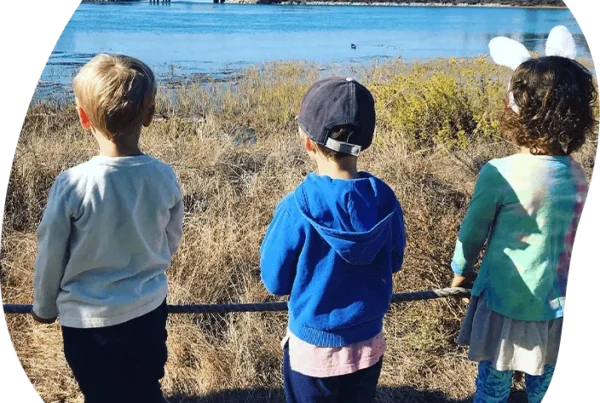
Outdoor time is especially powerful because nature does not come with a script.
A stick does not tell a child what to do with it. A rock does not come with instructions. A fallen leaf does not have a right answer. A patch of dirt does not care whether the game has rules.
Nature offers open-ended materials, and open-ended materials invite imagination.
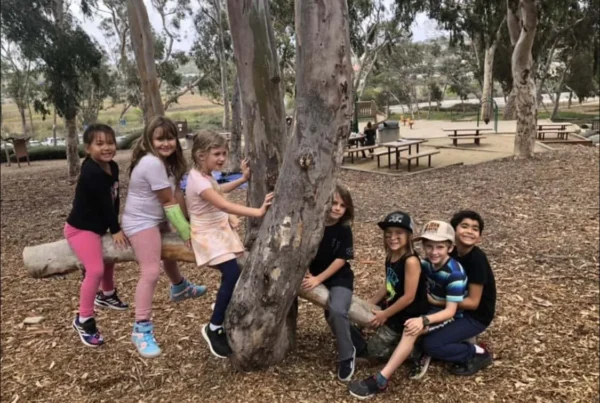
At first, your child may say there is nothing to do. Then a stick becomes a tool. A patch of dirt becomes a project. A fallen leaf becomes fodder for a collage. A rock becomes treasure for a home rock garden. A tree becomes a meeting place. A trail becomes a mission.
Children start to look closer. They begin to wonder more. They practice sitting with a little discomfort instead of needing every empty moment filled with entertainment.
Over time, they may begin to understand that “I’m bored” does not always need to be fixed with a device, a snack, or a new activity.
Sometimes it can be the beginning of play.
An Anti Cure For Boredom Inside The Home
Of course, kids cannot always be outside.
There are rainy days (ok, not many in San Diego), tired days, sick days, busy days, and days when the parent simply does not have the time or energy to create a magical outdoor experience.
The lesson is not that boredom only becomes useful outdoors. The lesson is that children need chances to create their own play, whether they are in the backyard, on a trail, or inside the house.
At home, boredom can become drawing, building, reading, pretending, helping with dinner, folding laundry into a game, making music, creating a tiny world with blocks, or building a blanket fort in the living room.
Sometimes a child needs a small nudge instead of a full entertainment plan.
“You can draw, read, build something, help me, or go outside for ten minutes.”
Let them choose. If they’re a little annoyed, so be it. Let them wander through the discomfort, but ultimately, they must discover that they are capable of finding something to do.
What Nature Scouts Collective Gives Kids
At Nature Scouts Collective, we believe outdoor learning gives children room to move, explore, imagine, collaborate, and build confidence in a way that feels natural because it is natural.
Our camps and programs give kids the chance to spend time outside with caring guidance, open-ended exploration, seasonal discovery, and plenty of room for curiosity.
Sometimes that looks like learning about plants, animals, weather, habitats, and local ecosystems.
Sometimes it looks like following a child’s fascination with a bug, a feather, a seed pod, a muddy patch, or a mysterious hole in the ground.
And sometimes it looks like a child who starts the day saying, “There’s nothing to do,” and ends up completely absorbed in a world they helped create.
That is one of the quiet gifts of nature.
It does not entertain children in the flashy way modern life often does.
It invites them in slowly.
A Simple Reminder For Parents
So here is the lesson I am still learning:
Kids do not need every empty space filled.
If summertime is particularly challenging for you and your child in terms of staying busy, consider one of our camps.
You can also learn about our nature enrichment classes held in coastal North San Diego County locations. Nature Scouts Collective accepts charter school funds from PCA and others. If you’re looking for an enrichment program for your home-schooled kid, get in touch with me with any questions!