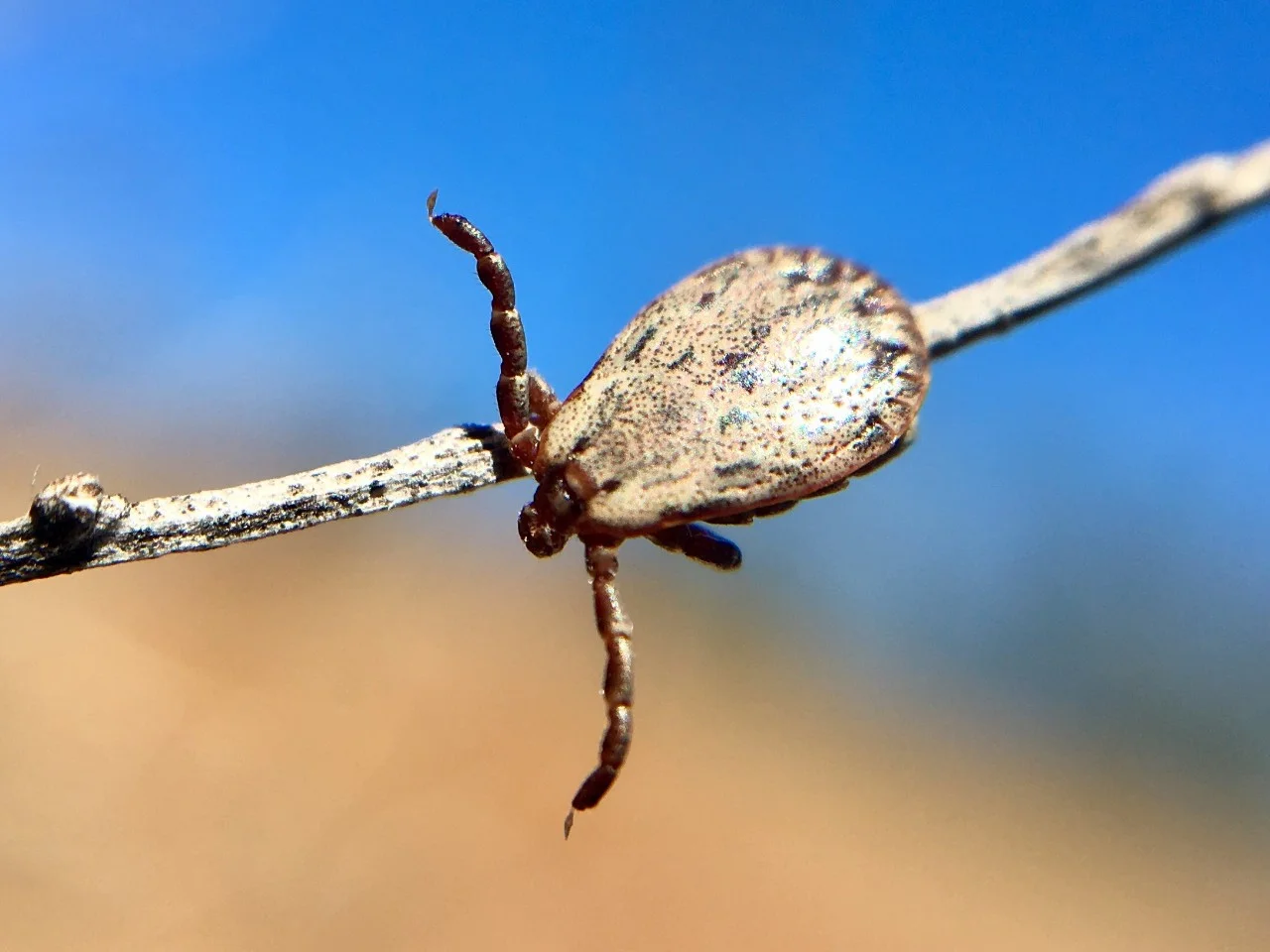
Photo courtesy of San Diego County Vector Control Program
Ticks aren’t top-of-mind for most San Diego families, and for good reason.
Even with recent reports of ticks carrying Pacific Coast tick fever in parts of the county, the overall risk of tick-borne illness here remains low. In fact, according to local reporting based on San Diego County Vector Control data, no ticks in San Diego County have tested positive for the bacteria that causes Lyme disease in the past 5 years.
Still, for families who spend extended time outdoors, a little awareness is worth having.
What’s Happening in San Diego Tick Prevention
San Diego County’s Vector Control Program regularly collects ticks from trails, identifies them, and tests them for pathogens. Locally, ticks can spread diseases such as tularemia, Rocky Mountain spotted fever, Lyme disease, and other spotted fevers, although, as mentioned, these illnesses are considered rare in San Diego County.
The recent local concern is Pacific Coast tick fever, which is spread by infected Pacific Coast ticks. Symptoms may include fever, headache, rash, muscle aches, and sometimes a dark scab at the bite site.
If you’re a parent who tends to lean more on the cautious side, keep in mind that awareness is the goal, not alarm.
How We Approach Outdoor Time at Nature Scouts Collective
At Nature Scouts Collective, children spend hours outside each week, but not without structure.
We’re intentional about where and how children explore. We avoid dense, unmanaged brush, maintain group visibility, and do regular visual check-ins throughout the day.
Kids are free to explore, but they are not wandering without awareness or supervision.
Outdoor learning should feel joyful, spacious, and adventurous. It should not feel reckless, and it should not make parents feel like they need to panic every time their child comes home with dirty knees.
Simple Tick Prevention in San Diego
After extended outdoor time, check the areas where ticks tend to settle: behind the knees, along the waistband, under the arms, behind the ears, and around the hairline.
Have your kiddo shower or rinse off after nature class, hiking, camping, or extended outdoor play.
You can also toss clothes in the dryer on high heat for 10 minutes. The CDC recommends heat as an effective way to kill ticks on clothing.
These steps are simple, quick, and easy to build into a post-adventure routine.
Choosing a Bug Spray: What Ingredients Should Parents Look At?
Let’s be honest. If you’re family is going to experiment with world-schooling, and you’re planning on visiting the wilds of Borneo, a little Palo Santo stick ain’t gonna cut it. You’ll need a bio-hazmat suit and cases of DEET. But, if you’re going to stay in San Diego, or be like me and venture to the East Coast, where Lyme-bacteria-carrying ticks are more prevalent, here’s what you should do, based on the advice of the Environmental Working Group.
The EWG notes that the following ingredients may be problematic for those concerned about using natural ingredients:
High concentrations of DEET:
DEET can be effective, but higher concentrations may increase the chance of skin or eye irritation. EWG has previously suggested lower DEET concentrations for children when DEET is used.
Permethrin applied directly to skin:
Permethrin is commonly recommended for clothing and gear, not direct skin application. The CDC and EPA discuss permethrin as a clothing and gear treatment, not a lotion-style repellent.
Synthetic fragrance blends:
“Fragrance” “perfume” or “parfum” include carcinogenic volatile organic compound mixtures. Set aside the concern for overall health and there’s also a concern with VOCs over their effects on those with sensitive skin.
Aerosol sprays with propellants or solvents:
These can increase inhalation exposure, especially when sprayed close to a child’s face or body.
This doesn’t mean every conventional bug spray is automatically “bad.” It simply means parents who are concerned about dermal exposure may want to read labels carefully and choose the lowest-exposure option that still works for the setting.
The Middle Ground: Plant-Based, But Still Effective
Some natural bug sprays smell lovely but let’s be honest, they don’t do much.
Others are effective but contain ingredients many parents would rather not use regularly.
One plant-based option worth knowing about is oil of lemon eucalyptus, also known as OLE. OLE contains a compound called PMD, which has been studied for repelling mosquitoes and ticks. EWG lists OLE among repellent options, while noting that it is not recommended for children under 3.
That makes OLE a practical middle ground for many families with older children: plant-based, studied, and more credible than a random essential oil blend.
As always, read the label, follow directions, avoid spraying near eyes or mouths, and test on a small patch of skin first if your child tends to react to topical products.
Final Thought
Ticks are part of many natural environments.
They don’t need to change how kids experience the outdoors.
With a few simple habits and thoughtful product choices, families can stay focused on the best antidote to screens and high-stress modern life: quality time in nature.
Give Your Child a Summer of Outdoor Adventure
Nature Scouts Collective summer camp gives kids the space to explore, learn, climb, create, and connect with nature in a safe, guided outdoor environment.
Spots are filling fast, and we’d love to welcome your child for a summer experience rooted in curiosity, confidence, and plenty of fresh air.