Parents naturally want their children to receive a strong education.
We look for opportunities that improve reading, math, science and other academic skills. But a complete education should also help children become creative thinkers, capable problem-solvers, confident communicators and resilient human beings.
Many of those abilities are not developed by sitting at a desk.
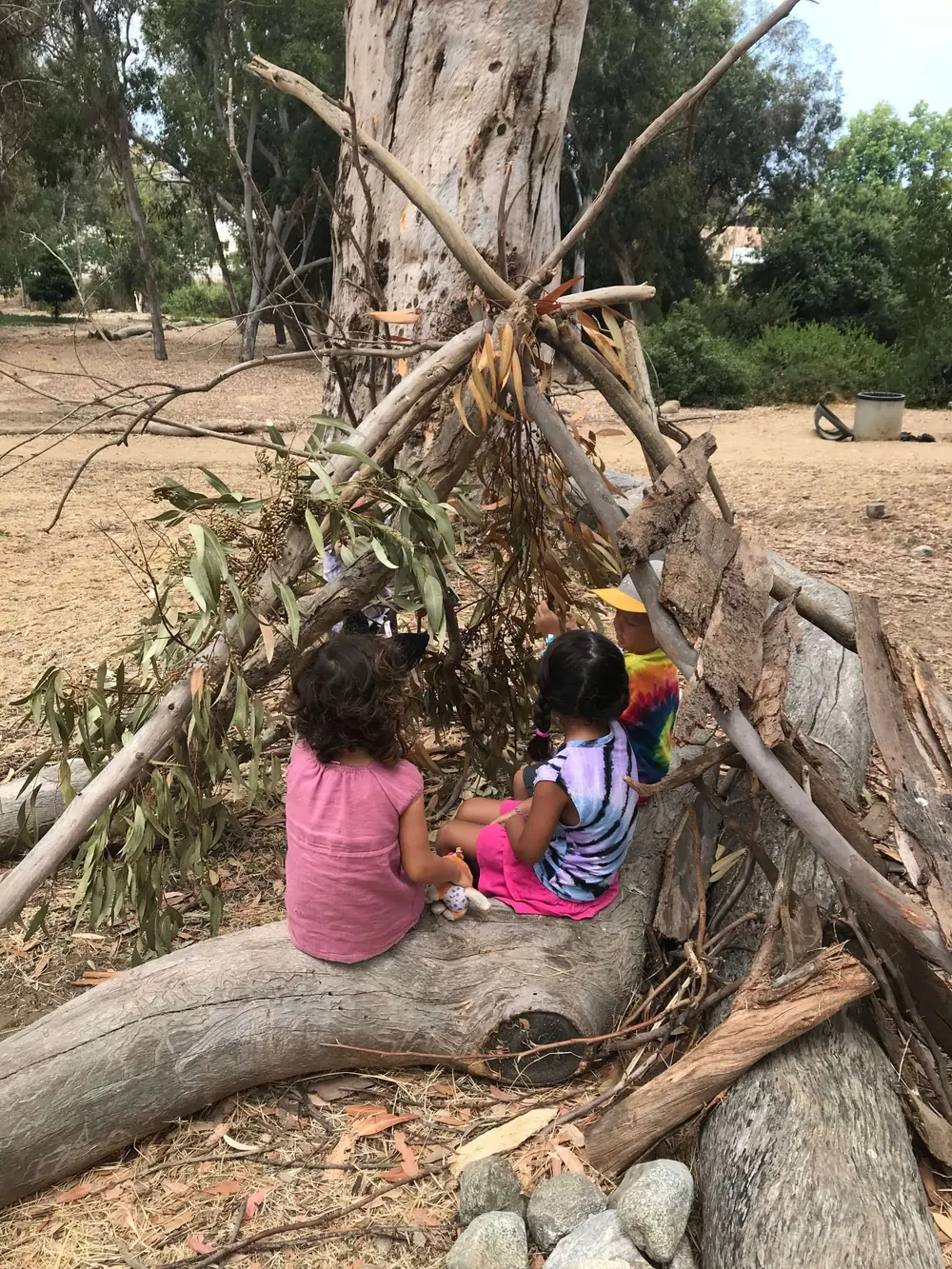
They grow while children are in nature, balancing on logs, building shelters from fallen branches, inventing games, navigating uneven terrain, studying the tiny ecosystem beneath a rotting log, and figuring out how to work through disagreements with friends.
An article I recently came across described nature as a school for six important childhood abilities that, in short, helps educate the whole child. Let’s take a look at THE BIG 6….
1. Intellectual Ability
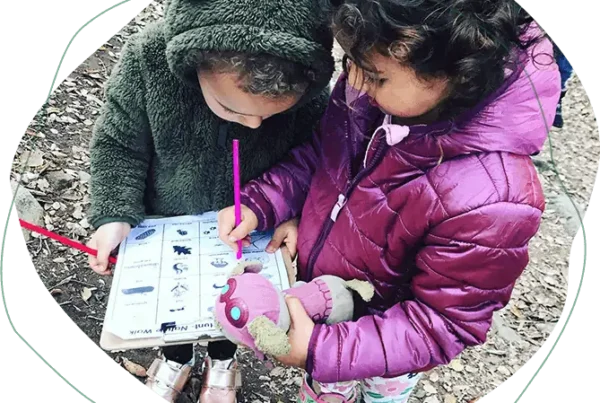
Nature constantly gives children something new to notice.
What made those tracks in the dirt?
Why are insects gathering beneath that rock?
How can we move this branch?
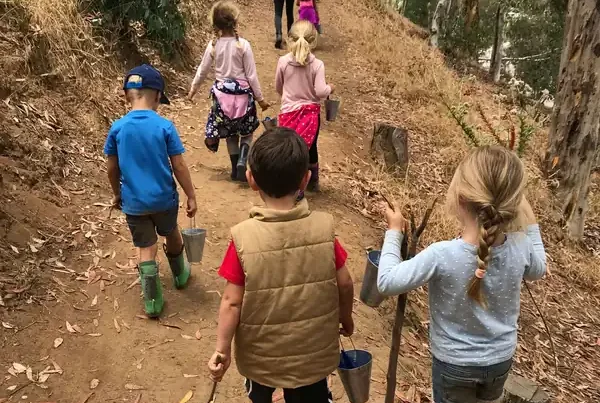
What is the best way to cross a muddy section of trail?
Children explore these questions through observation, experimentation and problem-solving.
Unlike a worksheet, the natural world rarely supplies one obvious answer. Children must pay attention, remember what they have already tried and adjust their approach when something does not work.
Research has also linked exposure to green spaces with benefits involving concentration, working memory and cognitive development.
Nature may look like a break from learning, but in reality, learning is happening everywhere.
2. Emotional Ability
Children spend much of their day in environments shaped by expectations.
They are asked to complete assignments, follow schedules, sit still, perform and move quickly from one activity to the next.
On the other hand, nature gives children space to slow down, reset and experience an environment that is not constantly judging their performance.
A child who feels frustrated can walk, dig, climb or sit quietly beneath a tree. Children also have opportunities to experience disappointment and work through it naturally. For instance, when a fort falls down or the interesting insect disappears. When it doesn’t unfold as planned, the child is more able to recognize their emotions, manage frustration and recover without an adult immediately stepping in to fix everything.
3. Physical Ability
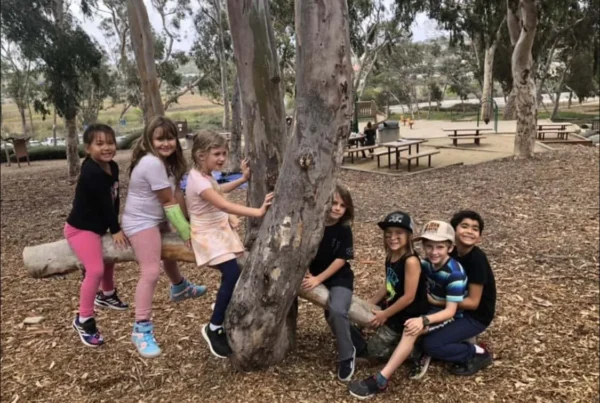
Nature encourages children to move their bodies in varied and unpredictable ways:
- Climbing
- Crouching
- Balancing
- Reaching
- Carrying
- Jumping
- Navigating uneven ground.
These movements differ from repeating the same motion on a piece of playground equipment or participating in a tightly structured athletic activity.
Natural environments challenge balance, coordination, strength and body awareness all at once.
Outdoor time also exposes children to natural daylight and gives them a physical outlet that can support healthy daily rhythms, including sleep.
Kids don’t think of nature play as exercise they must perform. Instead, they are simply and naturally reaching the next rock, carrying a branch or sprinting on the trail to keep up with their friends.
4. Creative Ability
Many toys are designed to be used in one specific way. Consider puzzles, toy cars, board games, etc. While there’s nothing wrong with single objectives, nature provides open-ended materials. For example, a stick can become a wand, fishing pole, shovel, bridge support, flagpole or imaginary creature.
Rocks can become food in a pretend restaurant, walls around a miniature village or markers in a newly invented game.
That freedom encourages imagination, experimentation and original thinking. It gives children the opportunity to create something that did not exist before and revise it as their ideas develop.
5. Social Ability
Outdoor play often requires cooperation.
Children must decide what they are building, who will gather materials and what rules everyone will follow.
Disagreements inevitably happen.
One child wants the branch to be part of a shelter. Another wants it to become a pretend boat. Someone feels left out. Someone changes the rules halfway through the game.
For play to continue, children must communicate, negotiate, listen and compromise.
Adults may be tempted to resolve every disagreement immediately. But when children have time and appropriate guidance, these conflicts can become valuable opportunities to practice social skills.
Nature gives children a reason to work things out together.
6. Adaptive Ability
Nature rarely remains perfectly comfortable or predictable. Consider muddy trails, a gust of wind, falling branches, collapsed forts and steep embankments. .
Children must decide whether to change their approach, ask for help or try again.
These manageable challenges help children learn how to assess risk, tolerate inconvenience and respond when circumstances change.
That is the foundation of adaptability.
Resilience is not developed by eliminating every obstacle from a child’s path. It grows when children encounter reasonable challenges and discover that they are capable of handling them.
Education Beyond Four Walls
Children need academic instruction.
They also need opportunities to think independently, regulate their emotions, move confidently, create freely, cooperate with others and adjust when things do not go according to plan.
Nature supports all six.
At Nature Scouts Collective in North County San Diego, children climb, build, dig, explore, study plants and wildlife, and play with friends.
Yet underneath that fun, they are also learning about biology, ecology, botany, zoology and other natural sciences while developing abilities that can support them in school, relationships and life.
Our nature enrichment programs provide children with the time, space and supportive community to learn beyond four walls.
Nature Scouts Collective offers Reggio Emilia- and Forest School-inspired homeschool enrichment programs for children in coastal North County San Diego. Through hands-on nature learning, child-led exploration and outdoor play, children build academic knowledge, confidence, creativity and social-emotional skills. Charter school funds are accepted.