I didn’t know AOL was still around. Didn’t it fade away along with Prodigy and dial-up internet?
Apparently not, because an article posted on AOL recently appeared in my Google feed. Its headline immediately caught my attention:
“Child Psychologists Recommend Nature-Based Play as the Best Outdoor Activity for Kids.”
The article interviewed three child psychologists who reached the same general conclusion: One of the most valuable things children can do is spend time exploring and playing in nature.
Then I came across a more scholarly article from Virginia Commonwealth University’s School of Medicine that took this familiar idea considerably further.
A third-year VCU medical student, Eleanor Dalsass, has been investigating whether nature-based education could support children’s emotional regulation, self-esteem and resilience. Her work also considers whether nature programs might benefit children affected by adverse childhood experiences and toxic stress.
Taken together, the articles present nature-based play as much more than a pleasant childhood pastime.
Nature may be one of the most important environments in which children learn how to handle frustration, make decisions, connect with others and feel capable in the world.
Why Psychologists Recommend Nature-Based Play
The psychologists interviewed for the AOL/Parade article emphasized that children need room to move and explore without the limitations they encounter indoors.
Nature gives children opportunities to engage their whole bodies and all their senses. They hear birds and moving water. They feel bark, sand, leaves and rocks. They balance on uneven ground, notice changing weather and encounter living things that behave in unpredictable ways.
They also have to decide what to do.
A creek does not come with one set of instructions. Neither does a tree, trail, pile of sticks or collection of stones.
Children can interact with those spaces and materials at their own developmental level. One child may quietly observe insects. Another may invent a game. A group may attempt to build a shelter, encounter a disagreement and revise the plan several times.
The lack of a predetermined outcome helps children practice creativity, independence and problem-solving.
Nature Gives Children Problems Worth Solving
Many parts of childhood are directed by adults.
Children are told where to sit, what page to open, how to complete an assignment and what the finished result should look like. Organized activities often come with rules, instructors, scoreboards and a correct way to participate.
Structure is important; children need instruction, boundaries and guidance.
But kids also need opportunities to encounter problems that adults do not immediately solve for them.
Outdoors, those problems arise naturally:
- How can we move this branch?
- Why did our structure collapse?
- Is that surface safe to climb?
- How can everyone contribute?
- What should we do when two people want the same object?
- Can we cross this area without stepping in the water?
- What could this natural material become?
These are not worksheets labeled “problem-solving exercise.”
They are real situations children care about resolving because the solution affects what they are trying to accomplish.
When children test an idea, fail, adjust and try again, they learn that frustration does not have to end the experience. A setback can become information.
That’s a critical component of emotional resilience.
The VCU School of Medicine article focuses on Dalsass’s involvement with a park in Richmond, VA.
The park includes learning gardens, a forest walk, an outdoor classroom, a chicken coop, and other areas designed to help children become comfortable and confident outdoors.
After volunteering there and observing its effect on neighborhood children and families, Dalsass began investigating how nature-based education might influence children’s long-term well-being.
Her work eventually focused on adverse childhood experiences, commonly called ACEs.
What Are Adverse Childhood Experiences?
Adverse childhood experiences are potentially traumatic events or conditions that occur during childhood. They commonly fall into categories including abuse, neglect or household dysfunction.
Unsurprisingly, research studies (such as this one in BMJ) suggest that exposure to childhood adversity can increase a person’s risk of anxiety, depression, aggression and other difficulties.
Persistent adversity may also lead to toxic stress. This occurs when the body’s stress-response system remains activated excessively or for prolonged periods without enough protective support.
Over time, toxic stress may influence neurological and immune-system development and increase the risk of chronic physical and mental health conditions later in life.
Preventing childhood trauma remains the priority, and children affected by trauma may need qualified mental health care and other professional support.
Dalsass’s investigation does not suggest replacing those interventions with a walk in the woods.
Instead, it considers whether safe, intentional nature programs could become another supportive tool for helping children develop emotional regulation, self-esteem and resilience.
What Might Nature-Based Education Offer?
Dalsass reviewed existing literature on nature therapy and educational programs, many of which operate in Europe and Asia.
She found similarities between those programs and the curriculum at the community park, including an emphasis on:
- Stress reduction
- Emotional regulation
- Self-esteem
- Hands-on learning
- Active participation
- Connection with other people and the environment
She believes further study could determine whether its programs produce similar benefits.
Medical and public-health researchers are taking nature-based education seriously enough to investigate its role in children’s lifelong health.
Small Outdoor Experiences Can Teach Larger Lessons
Some of the Richmond park’s activities illustrate how nature education can support more than academic learning.
At a vermiculture station, children learn about earthworms and their role in the ecosystem. At the same time, they practice carefully handling small, vulnerable creatures.
In a wildflower garden, children are invited to pick flowers for another person. They are then asked who will receive the flowers and why.
The children are learning about plants, but they are also thinking about generosity, gratitude and relationships.
In the community garden, children help grow and harvest produce that they can bring home. That activity can teach responsibility, patience, food awareness and the satisfaction of contributing to something over time.
Nature provides the context, but the developmental lessons reach far beyond botany or ecology.
Structured Education and Unstructured Play
At first glance, the two source articles might appear to recommend different approaches.
The psychologists in the AOL article emphasize open-ended, child-directed exploration, while the VCU summary offers curricula and adult-supported educational activities.
But these approaches do not have to conflict.
A strong nature program can provide:
- A safe environment
- Knowledgeable teachers
- Thoughtful learning opportunities
- Developmentally appropriate boundaries
- Time for children to explore and make choices
- Space for spontaneous play and discovery
Children benefit from adult guidance, but they do not need adults to control every moment.
The balance is important.
An instructor might introduce a habitat, plant, animal or environmental concept. The children may then explore, ask questions, build, investigate or follow a discovery in an unexpected direction.
The lesson has intention without becoming rigid.
Nature Play Builds Emotional Regulation
Emotional regulation is the ability to recognize and manage emotions rather than being completely controlled by them.
Children are still developing this ability. They become frustrated, excited, disappointed, nervous or overwhelmed more quickly than many adults.
Nature-based play creates manageable opportunities to experience those emotions and work through them, such as during these scenarios:
- A fort collapses.
- A child is initially afraid to climb.
- A friend rejects an idea.
- A project takes longer than expected.
- A group has to compromise.
- A child becomes muddy, uncomfortable or unsure.
With appropriate adult support, these moments allow children to practice calming themselves, expressing what they need, reconsidering a plan and continuing after disappointment.
Emotional regulation does not develop because an adult tells a child to “be resilient.”
It develops through repeated experiences in which children encounter difficulty, receive appropriate support and discover that they can manage the situation.
Outdoor Play Can Develop Healthy Risk Assessment
One reason adults sometimes over-structure children’s play is the understandable desire to keep them safe.
But eliminating all uncertainty does not necessarily teach children how to make safe decisions.
Nature gives children opportunities to assess manageable risks:
- Is this branch strong enough?
- Is the rock slippery?
- How high am I comfortable climbing?
- Where should I place my foot?
- Do I need help?
- Should I try another route?
Children begin learning the difference between something that feels challenging and something that is genuinely unsafe.
Responsible adults remain nearby, establish boundaries and intervene when necessary. But within those boundaries, children can gradually build judgment and confidence.
The goal is helping children learn how to navigate the world rather than expecting the world to contain no risk.
What About Children Who Refuse to Go Outside?
Not every child will enthusiastically trade a favorite indoor activity for a nature walk.
The psychologists interviewed for the AOL article offered three practical strategies.
Start Small
Outdoor time does not have to begin with a long hike or an entire screen-free afternoon.
Start with five or ten minutes. Sometimes, the hardest part is simply getting out the door. Once children begin moving, observing or playing, they may want to stay longer.
Connect Nature to an Existing Interest
A child who enjoys art might draw leaves, landscapes or insects.
A child interested in photography could take close-up pictures of plants, textures or wildlife.
A technology-oriented child might use an app to identify a plant or bird.
A child who enjoys building might create something with sticks, stones or sand.
Not every child will have a positive interaction with nature in the same way. The goal for educators is to help each child find an entry point.
Offer Choices
Children are more likely to cooperate when they have some agency.
Outdoor time may be the expectation, but the child can choose how to spend it:
“Would you rather ride your bike or explore the trail?”
“Do you want to bring your sketchbook or binoculars?”
“Should we look for birds or interesting plants?”
The parent maintains the boundary while the child retains some control.
Nature Scouts Collective: Offering Nature-Based Learning & Play Since 2019
At Nature Scouts Collective, nature is part of the teacher, the materials and the learning experience.
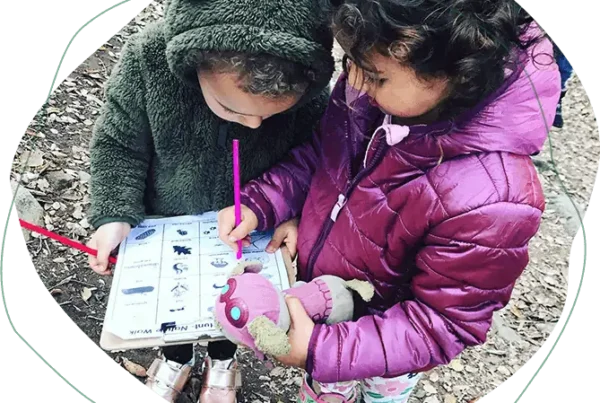
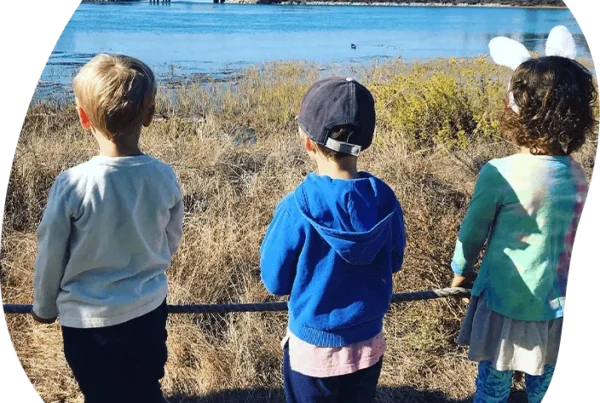
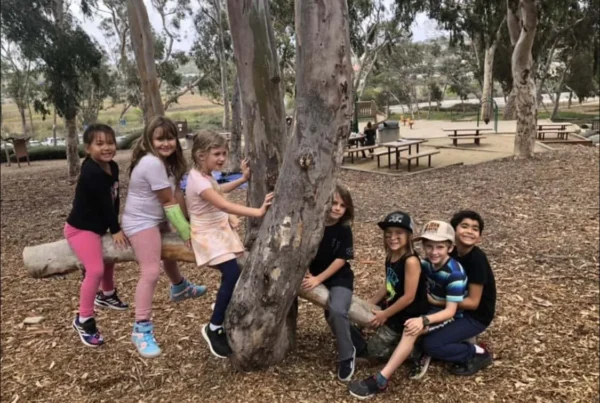
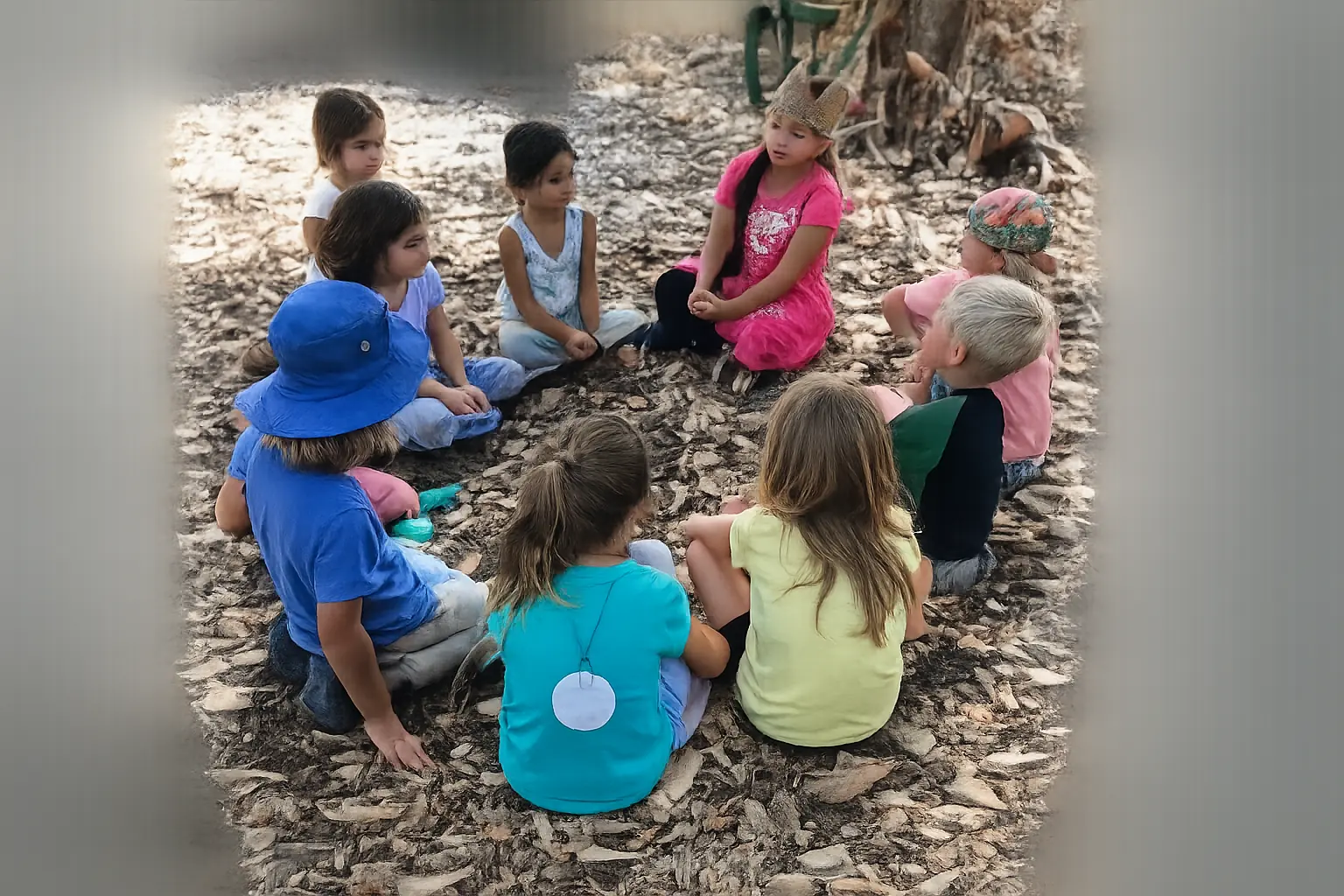
Children explore coastal North County San Diego habitats, investigate plants and wildlife, work with natural materials, collaborate with other students and learn through direct experience.
Our instructors provide knowledge, preparation and safe boundaries. But children also receive something that can be difficult to find in a highly scheduled childhood:
Room to wonder.
A planned activity may lead to an unexpected discovery. A child’s question may redirect the group’s attention. A pile of natural materials may become an engineering challenge, an artistic creation or the beginning of an imaginative game.
Children learn about the natural world, but they are also learning how to participate in a group, communicate ideas, manage frustration, take responsibility and trust their growing capabilities.
Nature Scouts Collective gives children something they urgently need: a place where learning, movement, creativity, challenge and connection can happen at the same time.
Explore Nature Scouts Collective’s homeschool enrichment programs.
Enrollment is now open for families seeking a meaningful nature-based learning experience in coastal North County San Diego. Charter school funds are accepted.