At some point, usually after one too many rushed mornings, standardized test emails or conversations that start with “my child is bored, ”many parents begin to question the traditional public school model. This post isn’t meant as a diatribe against the public school system. Rather, because many parents feel there’s a mismatch between how children naturally learn and how learning is commonly delivered, alternative education models are increasingly popular. Names like Montessori, Waldorf, Reggio Emilia, Forest School, and homeschooling get tossed around, sometimes interchangeably and without clarity.
This guide breaks them down the way parents actually need: where they came from, what they value, how they operate and how they differ in practice, not just in philosophy.
Reggio Emilia: When Learning Begins With Listening
Where public school is rooted in lesson plans, the Reggio Emilia philosophy begins with observation.
If you’ve ever watched a child become utterly absorbed in building something, asking questions that spiral deeper by the minute, or returning to the same idea again and again out of fascination, this is the seed of the Reggio approach.
Origin Story: From Reggio Emilia, Rebuilding More Than Schools
The Reggio Emilia approach emerged in post-World War II Italy, led by educator Loris Malaguzzi and a group of parents who believed that rebuilding society required more than repairing infrastructure. It required cultivating thoughtful, emotionally intelligent citizens. Children, in this view, were regarded as capable thinkers with ideas worth taking seriously, because after all, it would be the children that ultimately would rebuild a devastated European continent.
Core Philosophy: The Child as a Meaning-Maker
Reggio Emilia is built on a few foundational ideas. Children learn through relationships with peers, adults and their environment. Expression matters as much as information. Learning unfolds through long-term exploration rather than rigid units or worksheets.
Project-Based Learning often appears alongside Reggio Emilia, but it’s important to clarify what that means. In this context, project-based learning is a method, not the philosophy itself. Projects emerge organically from children’s questions and observations, not from predetermined academic standards or outcomes.
How It Shows Up in the U.S.
In the United States, Reggio Emilia most often appears as an influence rather than a strict replication. You’ll see it in early childhood programs, private schools, and homeschool enrichment communities (such as Nature Scouts Collective) that emphasize inquiry, collaboration and creativity.
California has been particularly receptive to Reggio-inspired learning, due in part to its progressive education culture and strong emphasis on early childhood development. Many programs here feature studio-like classrooms, documentation of learning instead of grades, and a strong emphasis on social-emotional growth.
Montessori: Independence, Carefully Engineered
Montessori classrooms are often calm, focused and quietly busy. That atmosphere is the result of an educational model that assumes children are capable of directing their own learning when given the right environment.
Origin Story: Maria Montessori and the Science of Self-Direction
Montessori education was developed in the early 1900s by Maria Montessori, Italy’s first female physician. Her approach was grounded in scientific observation rather than educational theory alone. She studied how children interacted with materials when given autonomy, then designed environments to support those natural tendencies.
Core Philosophy: Freedom Within Limits
Montessori emphasizes independence, mastery,and self-discipline. Children choose their work, repeat tasks until they feel satisfied and progress at their own pace. The classroom itself is highly structured, with materials designed for specific developmental stages, but that structure exists to serve the child, not the institution.
In the U.S., Montessori programs range from private schools to public magnet and charter programs. California has a large number of Montessori schools, particularly at the preschool and elementary levels. Depending on whether a program is private or public, it may follow different regulatory and curricular requirements.
Waldorf
Waldorf education takes a long view of childhood. Rather than focusing on what children should know by a certain age, Waldorf asks who children are becoming over time.
Origin Story: Rudolf Steiner and Education for the Whole Human
Founded in Germany in 1919 by philosopher Rudolf Steiner, Waldorf education was designed around the idea that intellectual development must be balanced with emotional, physical and imaginative growth.
Core Philosophy: Imagination Before Abstraction
Waldorf programs are known for delaying formal academics, emphasizing storytelling, music, art and handwork/crafts in the early years. Technology exposure is minimal, especially for younger children. Learning follows seasonal rhythms and developmental stages rather than standardized benchmarks.
The goal is not to withhold knowledge, but to introduce it when children are developmentally ready to engage deeply and meaningfully. Waldorf schools in the U.S. exist as both private schools and public Waldorf-inspired charter schools. California has a notable number of Waldorf charters, which must follow state education standards even while maintaining Waldorf-influenced pedagogy.
What Are The Key Differences Between Montessori and Waldorf?
Waldorf and Montessori differ primarily in how they view structure, timing and imagination in childhood. Montessori emphasizes independence, self-paced mastery, and early hands-on academics within a carefully prepared environment, while Waldorf prioritizes rhythm, storytelling, creativity, and delayed formal academics to protect imaginative and emotional development. In short, Montessori builds confidence through individual autonomy, whereas Waldorf nurtures development through shared experience and developmental timing.
Forest School: Nature As The Classroom
If you’ve ever wondered why countries like Denmark consistently rank among the happiest in the world, despite long and dark winters, Forest School offers a compelling clue. In these cultures, nature isn’t reserved for weekends. Instead, the outdoors is central to children’s development.
Origin Story: Scandinavia’s Open-Air Classrooms
Forest School originated in Nordic countries where outdoor play, physical challenge, and independence were seen as essential to healthy development rather than optional extras.
Core Philosophy: The Nervous System Comes First
Forest School emphasizes daily immersion in nature, physical confidence through managed risk, emotional regulation through sensory experience, and social development through cooperation and shared exploration. A growing body of research links nature-based learning to improved focus, resilience, emotional regulation and overall well-being.
In the United States, Forest School programs typically operate as private enrichment programs, early childhood outdoor schools, or homeschool supplements. California’s climate makes it especially well-suited for year-round outdoor education, particularly in Southern California where access to diverse natural environments is part of daily life (and umbrellas are rarely needed).
Homeschool (No Charter): Maximum Freedom, Maximum Responsibility
Homeschooling outside of a charter system offers the greatest degree of educational flexibility, and it also places the greatest responsibility on families. Parents choose the curriculum, set the schedule, and define what learning looks like day to day.
Within non-charter homeschooling, the concept of “unschooling” represents the far end of the autonomy spectrum. There is no formal curriculum. Learning emerges from interests, daily experiences, conversations, and exploration. Some families thrive in this environment, while others prefer more structure. The success of unschooling depends heavily on family capacity, support systems, and philosophical alignment.
In California, families can homeschool independently by filing a Private School Affidavit. For private home-based education, California does not require vaccines (more on this below) and parents retain full educational control.
Homeschool Through a Public Charter: Flexibility With Oversight
Charter homeschool programs offer a middle ground for families who want flexibility without fully going it alone. Parents guide day-to-day learning, but receive public funding, curriculum options and oversight from a credentialed teacher. With public funding comes accountability; charter homeschool families must follow state standards, participate in assessments and comply with some public school regulations.
Vaccine Mandates For Alternative Education Models in California
Public schools in California must follow the state’s immunization requirements for school entry. However, California law also recognizes an exception: students enrolled in an independent study program with no classroom-based instruction are not required to meet immunization requirements for entry. Families who homeschool via a home-based private school (such as filing a Private School Affidavit) are also not subject to these school-entry immunization requirements.
Private schools, including private Montessori and Waldorf programs, must comply with California private school immunization laws.
Private homeschool programs operating under a Private School Affidavit are not subject to California vaccine requirements.
Forest School and enrichment programs vary depending on how they are classified, and families should confirm requirements directly with individual programs.
Where Nature Scouts Collective Fits
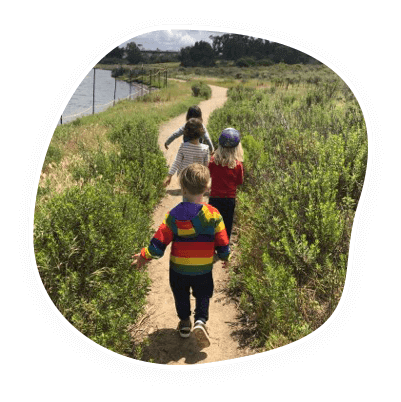
Nature Scouts Collective blends Reggio Emilia’s child-led, inquiry-based approach with Forest School’s research-backed nature immersion to create a homeschool enrichment program that supports children emotionally, cognitively and spiritually.
Our program serves independent homeschool families, charter homeschool families, and parents seeking meaningful, experiential education rooted in nature.
Rather than asking children to adapt to an institution, Nature Scouts Collective builds learning around how children naturally grow, explore and make sense of the world.
Learn more about the programs here:
https://naturescoutscollective.com/our-program/


