
As a mom, I’ve set a goal for our family: less screen time, more nature. One of the ways I’ve been learning about the science behind this is by listening to podcasts while I cook or drive. Recently, I stumbled across Big Brains, a show from the University of Chicago that features researchers whose work is transforming how we understand the world. A recent episode with psychologist Marc Berman hit close to home — and I think you’ll relate.
Why Screens Don’t Really Relax Us
We often think that unwinding after a long day means putting on Netflix, YouTube, or a game on the iPad for the kids. But Berman’s research shows that binge-watching or scrolling isn’t truly restorative. Instead of feeling refreshed, people often end up more irritable and distracted.
I admit, the science on this isn’t exactly Earth shattering; it’s no splitting the atom-worthy revelation. Still, it’s worth repeating this again and again, including to our children.
Berman explains something called directed attention — our brain’s ability to choose what we focus on. It’s a limited resource, and when we push it too far with digital stimulation, it depletes. Kids (and adults) are left restless, cranky, and unable to focus.
How Nature Recharges the Brain
So, what actually restores attention? According to Berman, the answer is … wait for it … nature! In his now-famous Walk in the Park Study, participants who spent time outdoors performed significantly better on attention tests than those who walked through city streets.
Even kids with ADHD saw improvements equal to taking a dose of Ritalin after just a short nature walk!
Importantly, the benefits of nature aren’t tied to mood or personal preference. Even if the walk took place in freezing weather, the results held steady. (Even in North County San Diego, early morning temps can be at or near freezing; one reason lots of moms tell me they like that Nature Scouts Collective starts at 10 a.m.!)
In short, nature replenishes the brain on a deeper, biological level.
More Than Attention: Mental and Physical Health Benefits
The benefits don’t stop at focus. Studies show that time outdoors:
-
Reduces stress and anxiety.
-
Helps patients recover from surgery faster.
-
Lowers aggression and even crime rates in neighborhoods with more green space.
-
Improves cardiovascular health and lowers the risk of chronic disease.
Doctors in Canada and the UK are even prescribing nature walks for patients with depression and anxiety. More and more, studies show that green space is medicine.
The Power of Soft Fascination
One of Berman’s most interesting ideas is soft fascination. Unlike the harsh stimulation of Times Square or a video game, nature gently captures our attention. Watching leaves sway or listening to water flow engages our minds just enough without overwhelming them. This balance allows our brains to rest and restore energy while still keeping us engaged.
This is why kids can spend hours outdoors without the same “fried” feeling they get after hours in front of a screen. Their attention is being replenished, not depleted.
Applying These Lessons For Your Kids
Attention is central to almost everything we want for our children: emotional regulation, learning, problem-solving, and impulse control. Without breaks that restore attention, kids face a cascade of struggles, including irritability, poor focus, even aggression.
Unfortunately, modern education often doubles down on indoor time and reduced recess, leaving children with fewer opportunities to recharge. Add in hours of homework and digital entertainment, and the result is a recipe for burnout.
How Nature Scouts Collective Puts the Science of Nature Into Practice
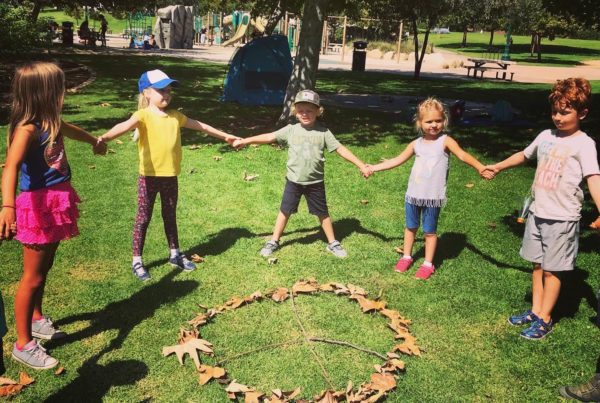
At Nature Scouts Collective, we build our pods on this research. Instead of forcing kids into rigid, overstimulating environments, we place them in natural settings where curiosity leads the way.
A day with us might include:
-
Observing fractal patterns in leaves and seashells
-
Reading literature that connects directly to hands-on survival skills
-
Applying science concepts while exploring streams, trees, and soil
-
Developing patience and resilience through project-based learning outdoors
Nature Scouts Collective is not a glorified outdoor play date! It’s education designed around how the brain actually works best.
Parents often notice the difference quickly: calmer evenings, smoother mornings, more focus on schoolwork, and an overall lift in mood. Kids thrive when their environment restores their attention instead of draining it.
Nature as a Necessity, Not a Luxury
One of Berman’s strongest points is that nature shouldn’t be treated as an optional “nice-to-have.” Just as schools teach math and reading, they should also protect time in nature as a core part of learning.
That’s what we’re doing at Nature Scouts Collective. By weaving environmental neuroscience into our programs, we’re giving children not only academic knowledge but also the mental and emotional strength they need for life.
Let me know what you think…
Erika Williams
Credentialed California Teacher
Founder & Director, Nature Scouts Collective
P.S. Curious about how outdoor pods can benefit your child? Learn more about our program or get the enrollment process started.