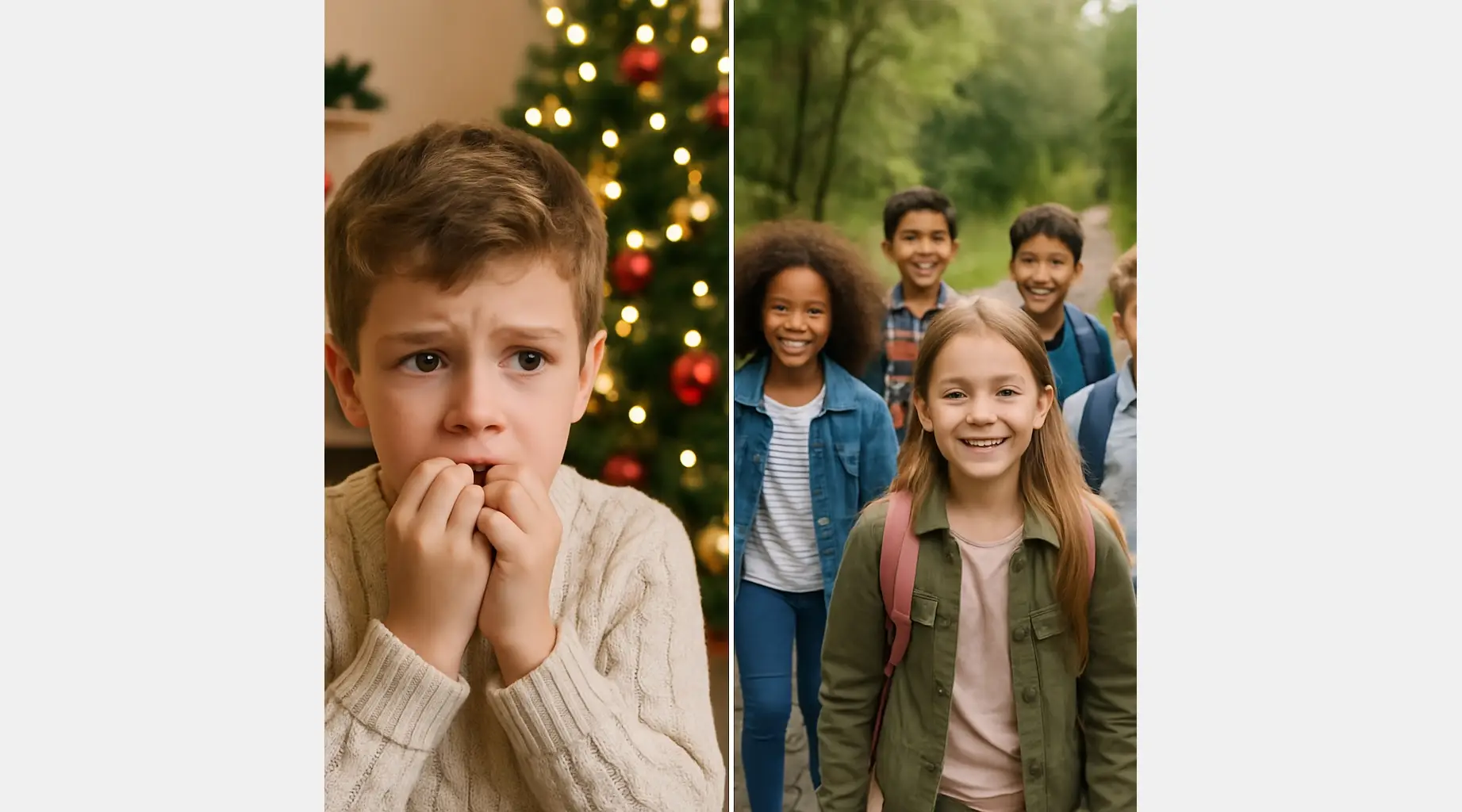
The holidays may be magical, but they’re also a time when kids feel more anxious than adults often realize. Yes, they’re not racing through Target, wrapping gifts at midnight, or juggling end-of-year deadlines, but they have their own stressors: routine disruptions, long car rides, uncomfortable social obligations, separation from school friends, overstimulation, and the emotional intensity that sweeps through families this time of year.
Even without a clinically diagnosed anxiety disorder, most children experience some form of underlying tension. It’s part of being human, but, unfortunately, this dis-ease is increasing.
Childhood Anxiety Is Rising
Research confirms what many parents intuitively feel. A 2021 study published in JAMA Pediatrics found that symptoms of anxiety and depression in children have increased significantly since the COVID-19 pandemic, with anxiety prevalence rising globally. Additional research suggests that constant digital stimulation, social media comparison, academic pressure, and increased time indoors all contribute to elevated baseline stress levels in kids. A more recent 2023 meta-analysis in the same publication echoed these findings.
Children today live in a world with fewer natural pauses. Screens fill downtime. Activities fill afternoons. Notifications keep their brains in a state of constant alertness. And because kids don’t usually verbalize anxiety the way adults do, it shows up in other ways: irritability, sensitivity, clinginess, trouble focusing, trouble sleeping, or emotional overload.
Why Nature Helps Anxious Kids Self-Regulate
Nature is one of the most effective, evidence-backed supports for anxious children. Time outside lowers cortisol, reduces rumination, stabilizes mood, and replenishes attention. A Stanford University study found that walking in nature reduced activity in the subgenual prefrontal cortex. This is the part of the brain associated with negative self-talk and repetitive worry. Nature acts as a sensory reset. The breeze, the uneven ground, the birdsong, and the movement all work together to regulate the nervous system.
The Outdoors Gives Kids What Their Bodies Need
Kids aren’t built for long stretches of stillness, minimal movement, and constant cognitive load. They’re wired for exploration, sunlight, novelty, and safe physical challenge. When children hike, climb, balance, or observe wildlife, they naturally release tension. Their bodies work with them, not against them. Outside, they don’t have to perform or hold everything together. Nature doesn’t judge or hurry them. It simply lets them be themselves.
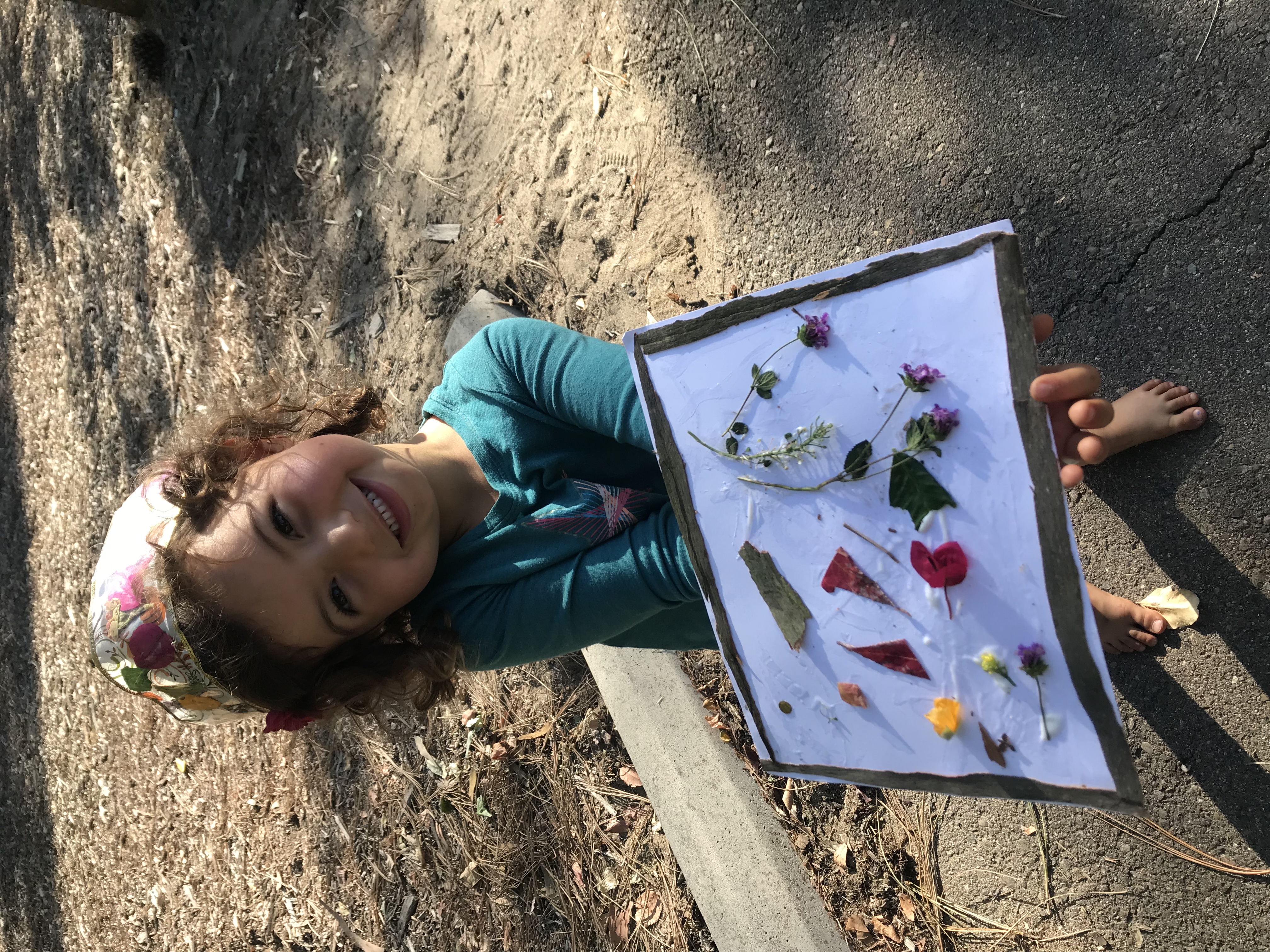
Now that does not imply that at Nature Scouts Collective, academic learning is not part of the program. In fact, our pod-like nature classes offer “Wild Math” and several of the “ology” subjects: Geology, Ecology, Archaeology, Geography, Ornithology, Anthropology, and Biology. There’s also botany and the basics, reading and writing.
(You can learn more about our program here. And if you have any concerns or questions, do not hesitate to reach out. I’ve been a part of North County San Diego homeschool community since practically my daughter was born in 2015.)
A Year-Round Solution, Not Just a Holiday One
While holiday anxiety is common, many children feel anxious throughout the year. Screens, academics, peer dynamics, online platforms, and other stressors contribute to a baseline of tension that nature helps counterbalance. Outdoor learning provides a year-round foundation for emotional well-being, especially for sensitive or easily overstimulated kids.
Why Nature Scouts Collective Helps
At Nature Scouts Collective here in North County San Diego, we witness these transformations every week. Kids who arrive overwhelmed often leave our Forest School and Reggio Emillia-inspired program grounded, laughing, and reconnected with themselves. The combination of nature, movement, curiosity, and community creates an environment where anxiety loosens and confidence grows.
If you’re considering homeschool for Spring 2026 or want to support your child with more nature-centered learning, nature may be exactly what they need.