Mud needs a new publicist.
The brown gunky stuff stains clothes, tracks into the house and triggers a reflexive “please don’t touch that” in many parents (let’s be honest: mostly moms). Somewhere along the way (even pre-Covid when some people went a little overboard with hand sanitizer), people absorbed the idea that clean equals healthy, and that dirt and mud are things children should be protected from.
But research suggests otherwise.
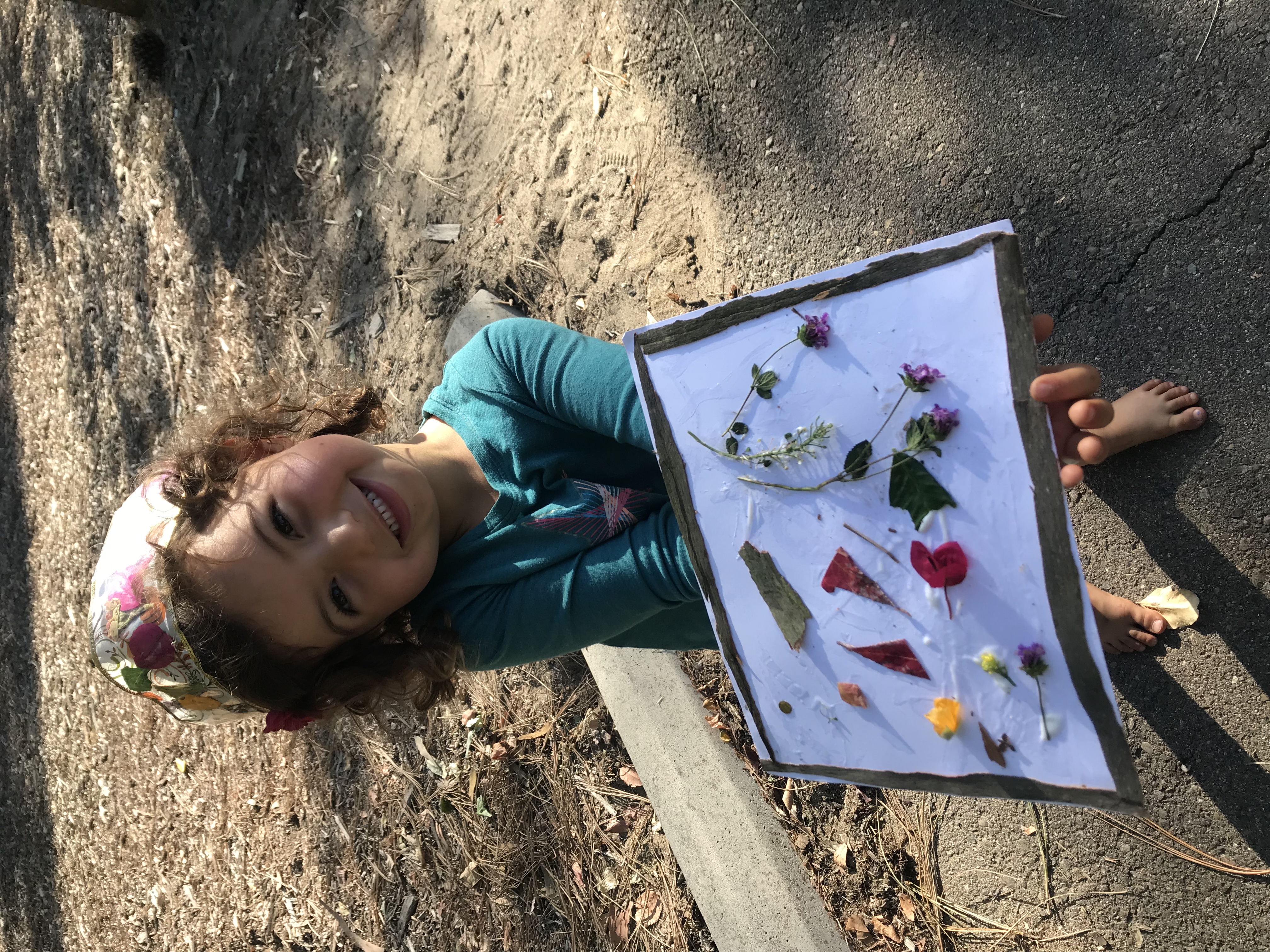
When kids are allowed to touch grass, soil, sand and mud, it’s not a recipe for a messy disaster. Well, it might be, but the benefits far outweigh laundry stains. At Nature Scouts Collective, kids intuitively interact with the ecosystem and are also encouraged to do so. This is because exposure to the earth bolsters kiddos’ immune development, emotional regulation and even learning.
But What About Germs?
Well, what about ’em? When most people here the “G” word, they think bad germs. Not all germs are bad, however. And when we’re talking about kids playing in the natural elements, context matters. Are we talking about babies and toddlers sticking things in their mouth or are we talking about an older cohort that is touching and stomping on squishy terra firma? Moreover, what’s the socio-economic status and environmental health of the setting? Are we talking about a very young child playing in the polluted Tijuana River Valley? If I were a South Bay San Diego mama, I would probably avoid going to Coronado and Imperial Beaches with my little one. That’s not to say that North San Diego County beaches are never polluted. However, I think you catch my drift….
Without doubt, setting matters because repeated exposure to contaminated soil can pose real health risks. For example, research conducted in rural Bangladesh found that very young children who regularly ingested contaminated soil (a behavior known as geophagy) had higher levels of gut inflammation and an increased risk of stunted growth. In those environments, soil can harbor pathogenic bacteria such as E. coli, making caution absolutely warranted.
But outdoor enrichment nature classes involve children playing barefoot in grass or squishing mud between their fingers in a (relatively) healthy ecosystem. And then, if a mama so chooses, can have their kids wash their hands (but don’t use antibacterial soap or hand sanitizer; they are like nuclear bombs for your kids’ immune systems.)
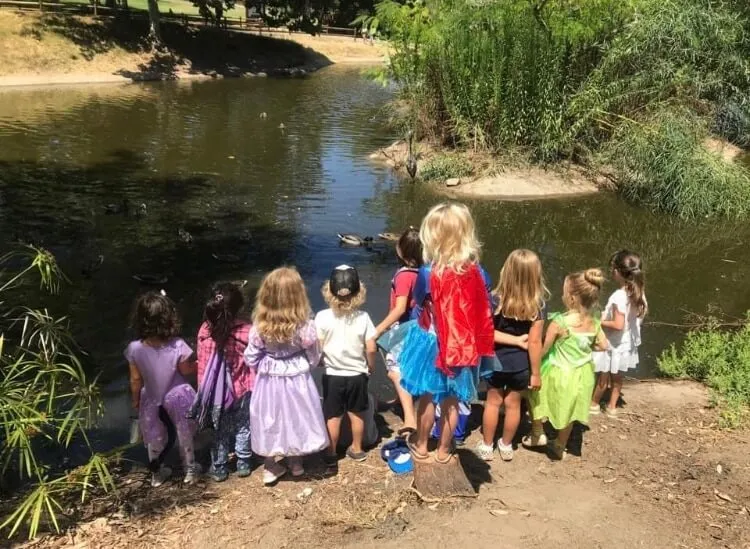
Here in coastal North County San Diego, we’re fortunate to live in an environment where outdoor play looks very different. Nature Scouts Collective kids aren’t toddlers, so they’re not eating dirt. Instead, they’re digging, running, splashing and exploring. That kind of exposure is not only safe, it’s beneficial.
The Microbiome: Your Child’s Inner Ecosystem
Every child carries a vast internal world known as the microbiome: trillions of bacteria, fungi, and viruses that live on the skin and in the gut.
This internal ecosystem plays a critical role in:
-
Training the immune system
-
Regulating inflammation
-
Supporting mood and emotional resilience
-
Influencing brain development and learning
The microbiome is shaped by environmental exposure, especially during early childhood, when the immune system is learning how to respond to the world. I want to keep my daughter in a social bubble, protecting her from nefarious social media influences. But when it comes to her health, I encourage her to get dirty!
The Biodiversity Hypothesis
One of the most influential frameworks explaining why outdoor play matters is known as the biodiversity hypothesis.
Proposed by immunologists studying the rise of allergies, asthma and autoimmune conditions, the hypothesis suggests that reduced contact with natural environments leads to reduced microbial diversity and weaker immune regulation.
When children spend less time in nature, their microbiome’s become less diverse, and their immune systems have fewer opportunities to learn what’s harmless and what’s a real threat.
What the Research Shows
A landmark study published in Proceedings of the National Academy of Sciences (PNAS) found that people who live in closer contact with natural environments tend to have more diverse microbiomes and better immune regulation. Children exposed to soil, plants and natural outdoor spaces showed microbial profiles associated with lower rates of allergic and inflammatory disease.
This research helps explain why kids who regularly play outdoors often demonstrate:
-
Stronger immune resilience
-
Lower rates of allergic conditions
-
Improved mood and emotional regulation
-
Better focus and attention
So mamas: the microbes found in soil and mud aren’t your kids’ enemies. Instead, they’re like teachers that train the immune system to distinguish from good and bad.
There’s nothing wrong with basic hygiene (using all-natural products). Over-sanitizing, on the other hand, may deprive children of the very microbial signals their bodies need to mature properly.
Let Your Kid Get Down And Dirty
For most of human history, children grew up in close contact with the natural world. Research simply confirms what nature has always known: connection to nature builds immune, emotional and cognitive resilience.
So yes, your kids’ clothes will get dirty. You may even need to throw their shoes in the washer or spray them off. And maybe those stains will never completely come out. But at the end of the day, the healthiest thing a child can do is get a little dirty.
Want your kid to get a little dirty? Check out our programs and do not hesitate to contact me with questions.