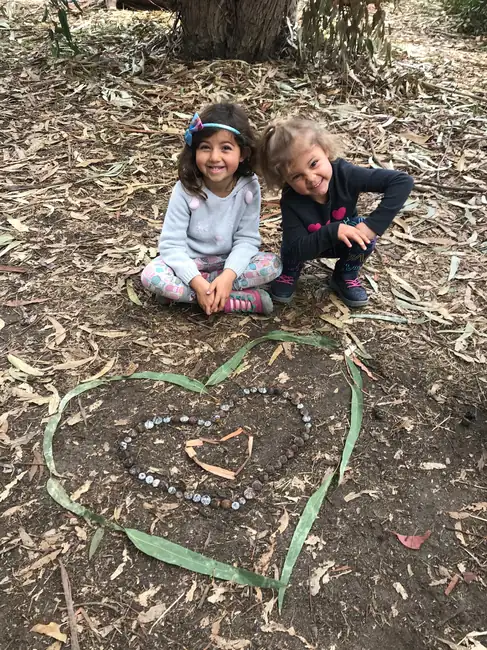
What can baby poop teach us about outdoor play?
Apparently, quite a bit.
Researchers in the Netherlands are studying whether young children who spend more time playing in nature may develop a lower risk of allergic conditions such as asthma and eczema. To explore that question, they are looking at two things most parents know well: baby poop and playground sand and soil.
It may sound strange at first. But the idea behind the research is simple and fascinating. When children play outside, they come into contact with soil, plants, trees, insects, animals, and the many invisible microbes that live in natural environments. Some of those microbes may help shape the gut microbiome, which plays an important role in immune development and overall health.
The science is still developing. Researchers are not saying that outdoor play prevents allergies, asthma, or eczema. But they are asking an important question:
What happens when children spend less time outside and more time indoors?
For parents, the bigger takeaway is encouraging. Early childhood environments matter. Where children spend their days, how they move their bodies, who they interact with, and how much contact they have with the living world may all play a role in how they grow.
And in today’s screen-filled world, that reminder feels more important than ever.
Kids Belong Outside
For most of human history, childhood happened outdoors.
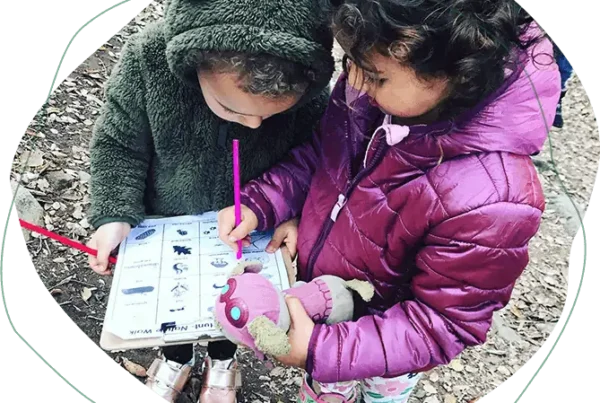
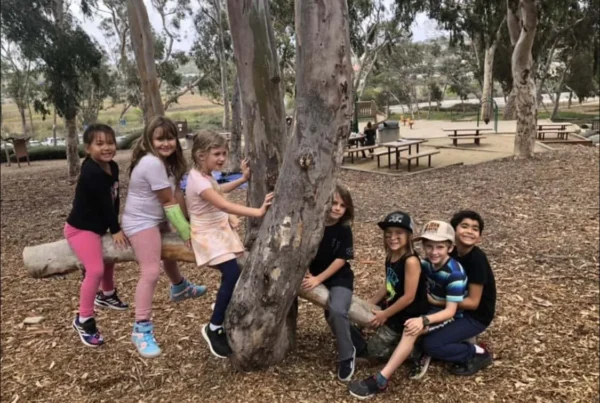
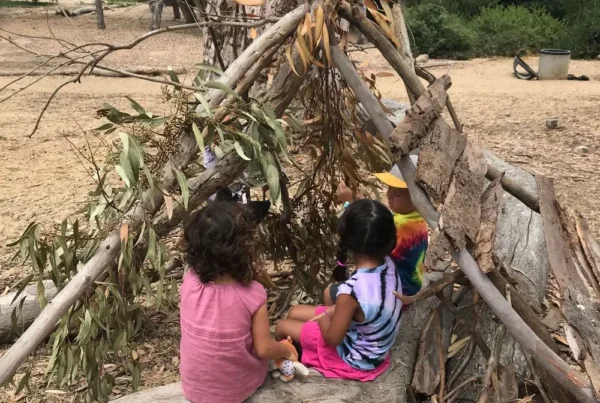
Children ran through fields, climbed trees, dug in soil, played in creeks, gathered sticks, built forts, watched bugs, followed birds, and invented games from whatever they found around them.
Today, outdoor childhood is no longer something we can take for granted.
Many children spend large parts of their days inside. They sit in classrooms, ride in cars, complete activities indoors, and then come home to tablets, televisions, video games, and phones. Even play has become more structured, more scheduled, and more screen-based.
This does not mean every child needs to live in the wilderness or spend every waking hour outside. But it does mean children need regular, meaningful time in nature, instead of just a relative few minutes of recess.
Children need time to move, explore, wonder, climb, dig, build, observe, imagine, and connect with the living world around them.
Outdoor Play Is More Than Fresh Air
When adults talk about outdoor play, we often describe it as a way for children to “burn off energy.”
Of course, children do need movement. They need to run, jump, climb, balance, crawl, stretch, and use their whole bodies. Outdoor play helps with coordination, strength, confidence, and physical development.
But nature play offers much more than exercise.
A natural outdoor setting gives children a full-body learning environment. The ground is uneven. The weather changes. A stick can become a tool, a wand, a bridge, a fishing pole, or part of a fort. A pile of leaves can become a nest, a mountain, a blanket, or a mystery to investigate.
Nature invites children to think creatively because it does not tell them exactly what to do.
Plastic toys and screens often come with rules, buttons, levels, instructions, and outcomes. Nature is different. It forces children to inquire “What can I build with this? How high can I climb safely? Why is the ground wet here? Where did the ants go?”
Outdoor play develops problem-solving, patience, sensory awareness, imagination, social skills, emotional regulation, and resilience. It gives children opportunities to take small risks, negotiate with friends, recover from frustration, and experience real accomplishment.
What The Microbiome Research Suggests
The gut microbiome is the community of bacteria and other microorganisms that live in the digestive system. Scientists now understand that this inner ecosystem plays an important role in digestion, immune function, and overall health.
A more diverse microbiome is generally considered a positive sign. In early childhood, microbiome diversity may be shaped by many factors, including birth method, breastfeeding, diet, siblings, pets, daycare, illness, and environment.
That last part is where outdoor play becomes especially interesting.
The researchers in the Netherlands are studying whether children pick up helpful microbes from outdoor environments, including soil and playgrounds. By comparing microbes found in children’s stool samples with microbes found in outdoor play areas, they hope to better understand how nature exposure may influence immune development.
Again, this does not mean dirt is magic. It does not mean parents should ignore hygiene, skip handwashing, or let children play in unsafe areas.
But it does suggest that a child’s relationship with the natural world may matter in ways we are only beginning to understand.
Children are not meant to grow up sealed away from the living world. Their bodies, senses, brains, and immune systems develop through interaction with their environments.
That includes sunlight, movement, other children, fresh air, plants, animals, weather, and even some contact with ordinary soil and mud.
What Covid Lockdowns Revealed
The Covid pandemic gave researchers an unexpected look at how much early environments may matter.
In the same line of research, scientists found that babies born during Covid lockdowns had gut microbiomes that looked noticeably different after one year compared with babies born before and after the pandemic.
That does not prove that less outdoor play caused the difference. Many factors changed during lockdowns, including daycare closures, reduced social contact, different family routines, altered illness exposure, and changes in daily life.
But the finding reinforces a larger point: children are shaped by their environments.
When children’s routines change dramatically, their bodies may reflect that change in ways researchers are still working to understand.
For parents, the lesson is not to worry over every missed playdate or indoor day. It is simply to remember that a child’s daily world matters.
The places children spend time in become part of their development.
A Screen-Filled Childhood Needs Balance
Screens are part of modern life. Most families use them. Most children encounter them. The goal is not to pretend screens do not exist or make parents feel guilty for using them.
But screens can quickly become the default.
A little downtime turns into another episode. A short game becomes an hour. A rainy afternoon becomes a full day inside. Schoolwork, entertainment, communication, and even social life all start happening through glowing rectangles.
That is why regular outdoor time matters so much.
Nature gives children something screens cannot.
It gives them depth, texture, unpredictability, movement, weather, effort, sound, smell, quiet, boredom, discovery, and real social interaction.
A child who spends the afternoon outside is using the whole body and the whole imagination. They are not just watching something happen. They are participating. They are making choices. They are solving problems. They are noticing the world.
Especially during summer, children should have the chance to experience long stretches of outdoor play. And when school is back in session, outdoor time may become even more important. After hours indoors, seated, listening, working, and often using screens, children need a place where they can move freely and reconnect with themselves, their friends, and the natural world.
Outdoor childhood should not be rare; it should be normal.
Why Nature Scouts Collective Exists
At Nature Scouts Collective, we believe children belong outside.
Outdoor learning supports movement, confidence, curiosity, social development, emotional resilience, imagination, and connection. And as emerging research suggests, regular contact with natural environments may also be part of the larger picture of healthy development.
When families choose Nature Scouts, they are choosing a healthier rhythm of childhood and time away from screens and inside walls. They are choosing fresh air, movement, friendship, wonder, and real-world exploration. They are choosing a place where children can run, climb, dig, build, observe, imagine, and feel at home in nature.
In a world where childhood is increasingly pushed indoors, giving children regular time outside is one of the simplest and most powerful things we can do for them.
Sometimes the healthiest thing we can give our children is more time outside.
Give your child more time outside with Nature Scouts Collective, a coastal North County San Diego nature enrichment program that blends outdoor play, hands-on learning, and exploration. Charter school funds accepted.